
For now, the concerns over bad loans have taken a back seat; a bigger challenge for the banking community is credit growth, explains Tamal Bandyopadhyay.
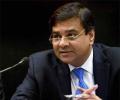
RBI said the outlook for economic growth for 2016-17 has turned uncertain after the unexpected loss of momentum by 50 basis points in Q2 and the effects of the withdrawal of banned notes

About 1 million bank officers are expected to participate in the strike on May 30 and May 31

Growing business opportunities fuelled by a robust economy and an increasing number of private equity investors are prompting investment bankers to quit their jobs and turn entrepreneurs.

Recently, CVC suggested that banks have a monitoring mechanism for bad loan sales to ARCs, with the cash flow statement from stressed assets shared with banks.

The PNB fiasco falls into a family line that involves non-fund limits - read contingent liabilities which are off-books. Harshad Mehta did it with bankers' receipts in 1992. Ketan Parekh exploited the ignorance of bankers who did not know the difference between a cheque and a pay-order. And the RBI blinked when it failed to insist the SWIFT platform be linked to the core banking solution. Raghu Mohan & Abhijit Lele trace the banking mess that was just waiting to happen.

Loans of over Rs 1.8 trillion, for which agreement has been signed by banks, are likely to be referred to IBC.

The RBI left the policy rates unchanged in Tuesday''s sixth bi-monthly monetary policy review.

Officials from 22 banks made representations before the minister and his panel about the industry expectations from the next financial budget.

Aided by the $57.8-billion merger of HDFC Bank and HDFC, India Inc reported its highest ever mergers and acquisitions in calendar 2022 at $171 billion as against deals worth $145 billion announced last year. The acquisition by the Adani group across cement, media and ports dominated the headlines with the conglomerate making its foray into the cement sector by buying Swiss materials firm Holcim's stake in Ambuja Cements for $6.5 billion. The Adani family's additional $4-billion open offer for Ambuja did not get a response because shareholders preferred to stay invested with the new owner.

Banks, led by State Bank of India, under special schemes offer home loans at lower interest (teaser) rates to the new customers for the first few years of the credit period, which has kicked up a storm in the industry.
The possibility of key policy rate cut is not bright as industrial output grew by 6.8 per cent in January against just 2.5 per cent in the previous month.

Move can also bring a huge change in the way business is done in India, where firms use multiple current accounts, often for even individual projects, making them difficult to monitor.

The problem for the NBFC sector is the funding inertia by banks and not lack of funds.

Owing to the risk perception attached with the segment by banks, the residential realty segment has been increasingly relying on non-banking financial companies and housing finance companies to raise debt financing, reports Abhijit Lele.

Senior bankers are trying to impress upon the central bank that the shift to external benchmark-linked lending be postponed to April 1, 2020.
While bankers and experts expect the lending rate to fall by about one percentage point in the near-term, the Prime Minister's Economic Advisory Council has strongly pitched for rate cut by the RBI in its monetary policy review later in the month.

These together account for 40 per cent of bad loans of around Rs 4 trillion.

Bankers on Thursday said the status quo in the monetary stance of the Reserve Bank is largely on expected lines taken after considering the tight liquidity situation and overall cooling inflation numbers.
'In their over-enthusiasm to clean up the system, both the banks and the regulator should not forget that the key to the insolvency law is revival of companies -- recovery of bank dues is an offshoot of that,' points out Tamal Bandyopadhyay.
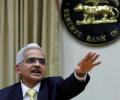
With many getting payment reminders, confusion prevails among borrowers, term-plan investors and credit cardholders over the implementation of the three-month moratorium on all loan repayments amid disruptions caused by the coronavirus outbreak. As part of measures to alleviate hardships faced by people, the Reserve Bank of India, on March 27, announced a slew of steps, including a three-month moratorium on loan repayments.

Madhabi Puri Buch, the first female chairperson of Sebi, doesn't plan to rest on her laurels in her third and final year in office and has set out an ambitious goal, such as moving towards a same-day and instantaneous settlement cycle for the secondary market.
National Thermal Power Corporation on Thursday said it has sought offers from global bankers for arranging a syndicated loan of $100 million to part finance its capital investment during the current fiscal.

As per the RBI Act, the central bank should have four deputy governors - two from within the ranks and one commercial banker and the fourth one an economist to head the monetary policy department.

The Adani group will be generating almost 90 percent of its Ebitda (earnings before interest, tax, depreciation, and amortisation) from infrastructure business by 2025 as compared to 83 per cent generated from these businesses currently, top company officials told bankers recently. Of the infrastructure business, 49 per cent of the profits are currently contributed by energy and utility, another 25 per cent by transport and rest by cement and logistics businesses. This will go up substantially as several new projects like Navi Mumbai airport and other projects get commissioned and contribute to the overall Ebitda pie, bankers were told.

The annual earnings of a non-executive chairman of a PSB is capped at Rs 10 lakh, inclusive of fees for attending board meetings. This is way below the compensation of the chairman of any private bank, reveals Tamal Bandyopadhyay.
FM will meet public sector bankers tomorrow in a pre-budget meet to stress on credit targets and enhancing credits to minorities.

For Lori Beer, chief information officer, JPMorgan Chase & Co, largest banker in the US, India is a big part of the organisation's global technology footprint and is core to its products and services. This is evident from the fact that in less than two months since JPMorgan & Chase chief executive officer Jamie Dimon visited India, Beer has come here to see the recently opened centres in Mumbai and Bengaluru. "What is different for me this year are our new centres and to be able to come and see the vibrancy, and connectedness is great.

Why do we need a bad bank, owned by the banks themselves when there are at least 28 ARCs around, asks Tamal Bandyopadhyay.
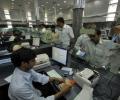
Nearly two million e-mandates for recurring payments have been registered with banks and card networks after the Reserve Bank of India (RBI) made it mandatory from October 1 to take prior consent of a customer before debiting her account, sources in know of the matter said. Industry estimates peg the recurring transactions at approximately 2.5 per cent of the total volume of transactions, and about 1.5 per cent in terms of value. Of these, around 75 per cent of domestic recurring transactions, and about 85 per cent international recurring payments are below Rs 5,000.

RBI deputy governor N S Vishwanathan has said the new framework was in line with the Insolvency and Bankruptcy Code guidelines.

The government plans to bring down its stake to 26 per cent in these two banks, which are yet to be identified. This may not come in the way of getting investors for these banks, provided the government is willing to step back rather than run them the way it had been doing for over five decades since these banks were nationalised, points out Tamal Bandyopadhyay.

There hasn't been any dramatic moment in the first act (the Budget) but nobody would complain. It's par for the course as long as the figures don't change in the main Budget, which will be presented after general elections.

With the management of most State-owned banks hardly having time to concentrate on big-ticket business, growing the business of loan disbursals has been pushed down the priority order.

There will be different ways of returning the money, depending on the profile of the depositors and the amount, predicts Tamal Bandyopadhyay.
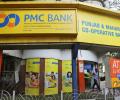
Mired in corruption, politics and with a history of suicides by its hapless depositors, PMC Bank's revival is a challenge very different from Yes Bank and LVB, both for the regulator and the rescuer, observes Tamal Bandyopadhyay.

While law-abiding customers are harassed for KYC and have to comply with endless paperwork even to open and close accounts, DHFL could easily open nearly 260,000 fake home-loan accounts, reveals Debashis Basu.
 © 2026 Rediff.com - Advertise with us - Disclaimer - Privacy Policy - Sitemap - Feedback - About us - Terms of use - Grievances